
Real Estate Lead Qualification Framework: How Brokerage Teams Prioritize High-Intent Buyers
A practical real estate lead qualification framework for brokerage teams that need faster response, cleaner prioritization, and higher conversion from serious buyers.

Most brokerage teams do not lose deals because they lack leads. They lose deals because the team cannot separate noise from intent fast enough. When every inquiry enters the same queue, urgent buyers wait, agents context-switch, and managers get activity without predictable outcomes. A real estate lead qualification framework fixes that by converting every inquiry into one of three things: immediate action, scheduled follow-up, or low-priority nurture.
This article gives you a field-tested model you can apply in daily operations without replacing your CRM. The objective is simple: increase qualified conversations and shorten time-to-first-relevant-action for the leads that can actually close.
Why most lead flows break before conversion
In many broker operations, intake quality and response standards are undefined. Agents rely on personal judgment, inbox order, or who shouts loudest. That creates two problems: inconsistency and delay. Inconsistency means two similar leads can receive very different treatment. Delay means strong buyers cool down before the first meaningful contact happens.
A qualification framework removes this randomness. Instead of debating every lead from scratch, the team follows a shared decision model with explicit thresholds and action commitments.
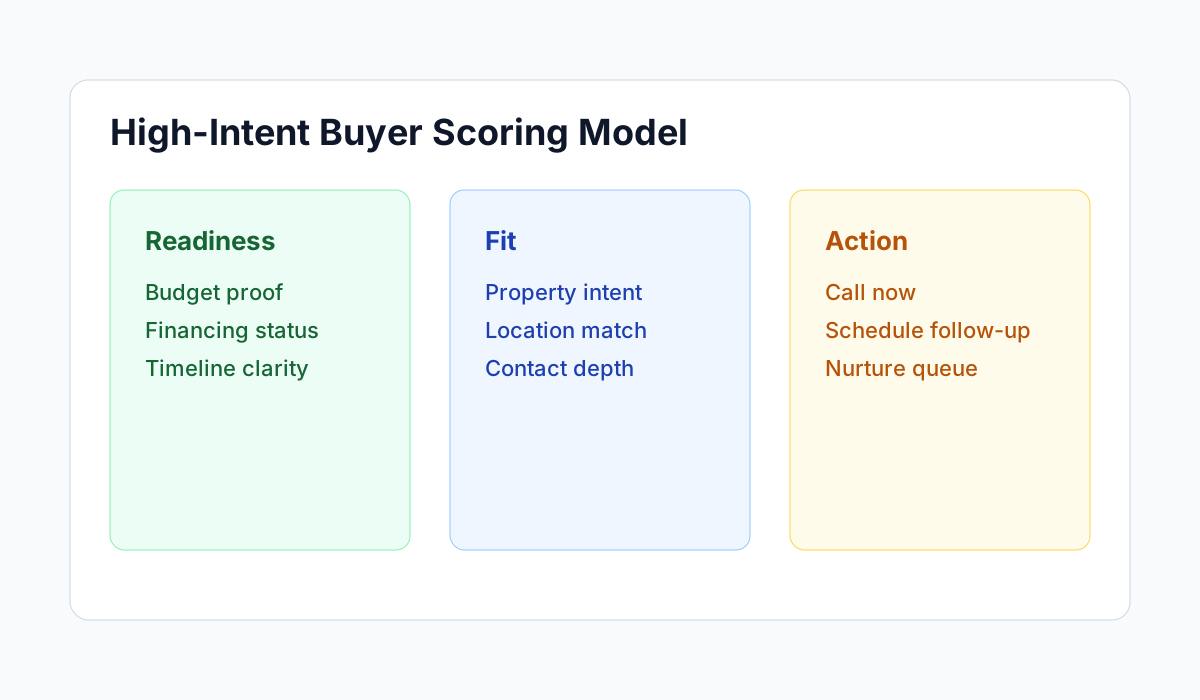
The minimum data signals every brokerage should capture
You do not need dozens of fields. You need the right fields. Focus on signals that directly influence readiness and deal probability.
- Timeline urgency: move-in window, viewing urgency, or purchase deadline
- Financing reality: budget range, proof status, mortgage readiness
- Intent clarity: property type, location boundaries, must-have constraints
- Contact reliability: complete phone/email, response channel preference
From scoring to action: where teams usually fail
Scoring alone does not improve revenue. The handoff from score to action is where most teams underperform. If a high-intent lead has no owner and no deadline, the score is operationally meaningless. Your framework must force an action state for every qualified inquiry.
Action states that keep execution disciplined
- Call now: high readiness and clear intent, assign owner immediately with a short SLA.
- Guided follow-up: partial readiness, request missing financing or timing context.
- Nurture queue: low urgency or low data confidence, automate touch cadence until intent changes.
Once these states are defined, team behavior becomes measurable and coachable instead of subjective.
Implementation blueprint for brokerage leaders
Execution quality depends less on tools and more on operating discipline. Start with one office or one team segment, calibrate quickly, then scale. A clean rollout should feel strict in week one and natural by week four.
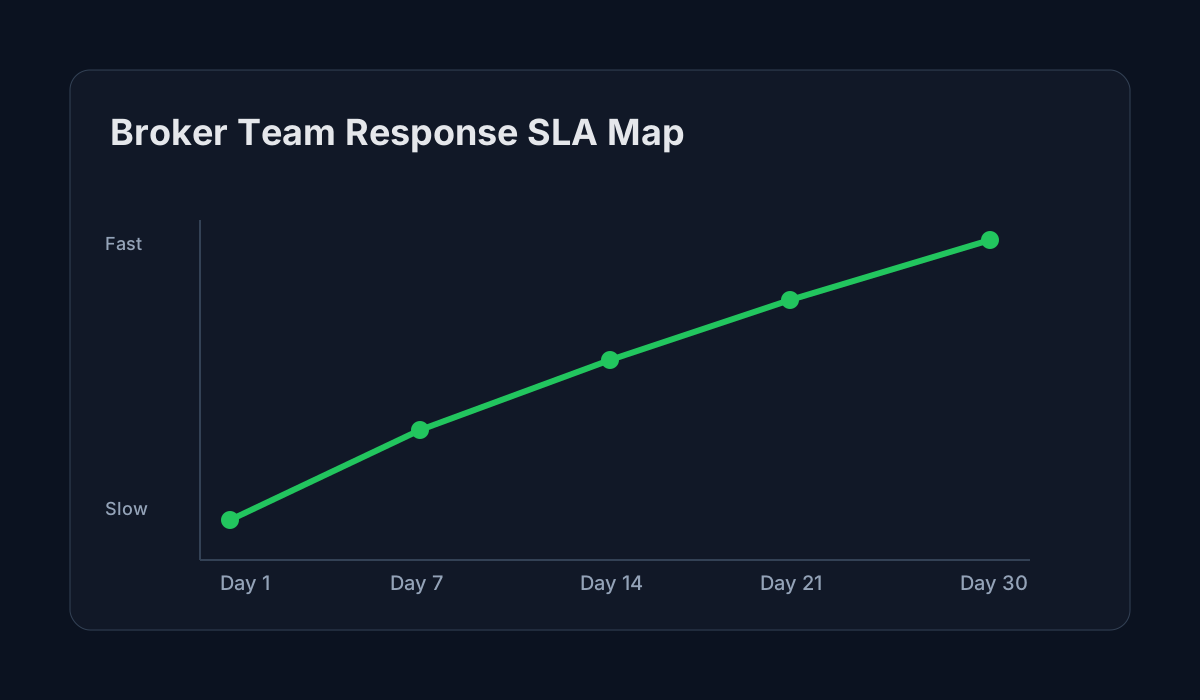
Week 1 to Week 2: establish baseline and response SLAs
Measure current response speed, qualified conversation rate, and follow-up consistency before changing anything. Then define explicit SLAs by action state. For example, "Call now" leads receive immediate outreach during business windows, while "Guided follow-up" receives prompt outreach with a clear checklist.
Week 3 to Week 4: calibrate thresholds using override data
Overrides are not failure. They are learning signals. If agents repeatedly override one segment, your thresholds are likely too strict or too loose. Capture override reasons in a structured way and update criteria weekly. This turns human judgment into measurable process improvement.
Week 5 and beyond: scale with governance, not guesswork
Before expanding seats or workflows, verify that metrics are stable. A mature framework should show three outcomes: faster first relevant action, higher share of qualified conversations, and lower manual triage burden per agent. If one of these is missing, scale will amplify friction.
SEO and revenue are aligned when the framework is real
Teams often separate marketing content from operations. That is a mistake. The same clarity that improves conversion in workflow also improves trust in your market positioning. When your brokerage can explain how inquiries are qualified and acted on, prospects perceive competence before the first call.
If your current process still prioritizes by inbox order, start with the framework above, then tighten weekly through override evidence. This is how real estate lead qualification becomes a revenue system, not a dashboard ritual.
Continue with Lead Quality Over Volume, Next-Action Workflow, and Explainable AI for Broker Trust.
The Qualu operating model: Readiness, Financing, Timing
The most practical real estate lead qualification framework does not try to predict everything. It focuses on three dimensions that directly change what a brokerage should do next: readiness, financing, and timing. Used together, they help teams distinguish serious-buyer identification from general inquiry volume without pretending to know the future with certainty.
How each dimension works
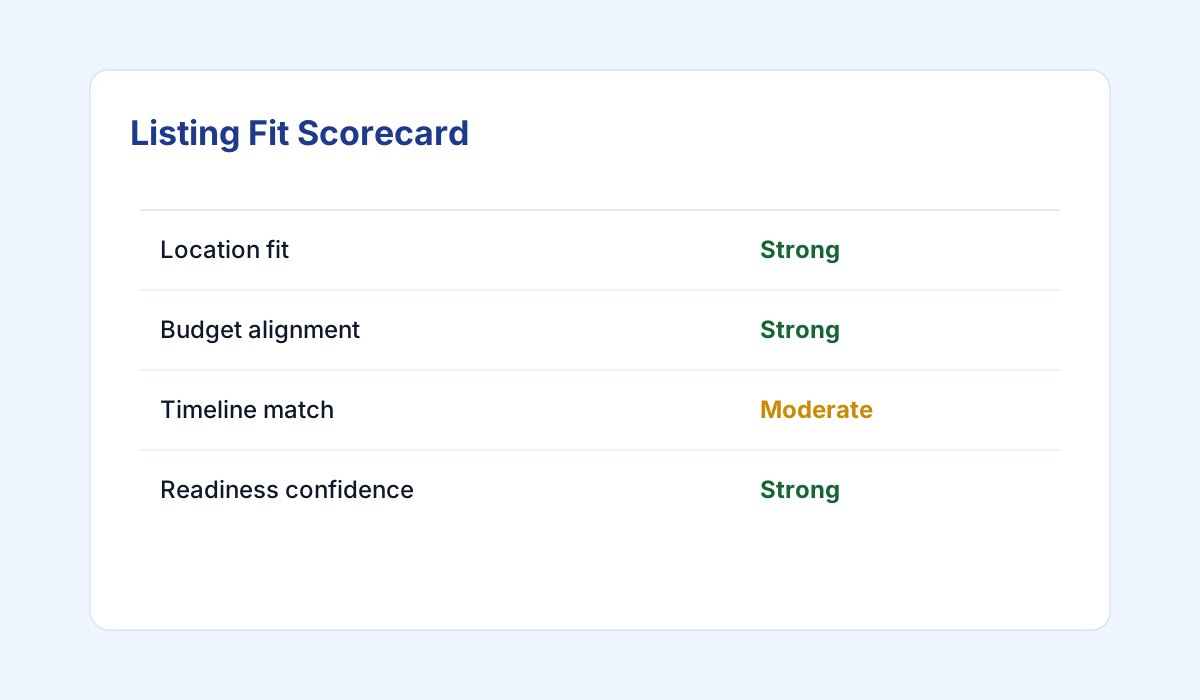
Readiness asks whether the buyer is gathering information or moving toward action. Financing asks whether budget and funding are still speculative or concrete enough to shape follow-up. Timing asks whether the window matters now or later. These three dimensions are easier for agents to capture consistently than vague labels like hot or cold.
Three hypothetical lead scenarios
Scenario A: Call now. A buyer asks for a viewing, describes specific requirements, and confirms funding is already in place. The score matters less than the fact that the next action is immediate human contact.
Scenario B: Needs clarification. The property fit looks strong, but financing and purchase timing remain unclear. Here the right move is qualification, not aggressive sales pressure.
Scenario C: Nurture actively. The buyer is early in research, interested, but not ready for near-term movement. The correct result is continued relevance without immediate agent time pressure.
Score is information. Action is the decision.
A numeric score can summarize pattern strength, but it is not the business outcome. The business outcome is whether the brokerage should call now, request more information, or keep the buyer in an active nurture path. This distinction matters because lead scoring without next-best action often creates false confidence.
Why override belongs in the model
Human override is not a failure state. It is a trust mechanism. Agents may know that a high-value buyer is unusually private, that local listing dynamics changed overnight, or that a financing signal is stale. A strong qualification framework should make override possible, visible, and reviewable.
What the model cannot know perfectly
Buyer circumstances change. Financing evolves. Some serious buyers initially share very little. Market nuance still matters. That is why qualification frameworks should improve decision quality, not claim certainty.
Next step: