
Why Explainable AI Recommendations Win Broker Trust
Transparent AI recommendations increase broker confidence and team adoption. Learn how explanation-first qualification beats black-box scoring in real operations.
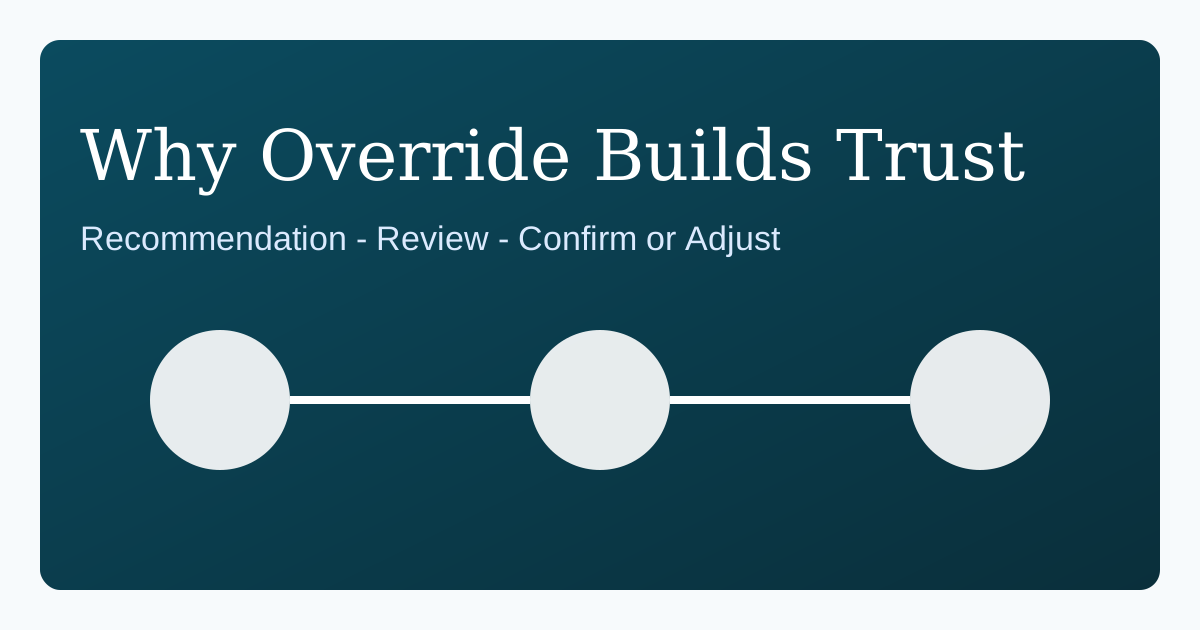
Most real estate teams do not reject AI because they hate automation. They reject it because they cannot defend it in front of clients, colleagues, or owners. When a system says call this lead now without context, trust collapses.
Black-box scoring creates operational risk
In brokerage workflows, every recommendation has a cost. A wrong priority can burn prime call windows, frustrate agents, and reduce close rates. If the team cannot see why a lead scored high or low, adoption drops after the first bad outcome.
This is why explainable AI is not a nice-to-have. It is a workflow requirement. Teams need a recommendation, a reason, and a next action they can execute immediately.
The override loop is where trust is built
High-performing teams review AI output, confirm what matches market reality, and override what does not. That override signal is valuable: it trains team behavior and improves model relevance over time.
- Recommendation: what the system suggests
- Reasoning: the signals behind the suggestion
- Next action: what to do now, not later
- Override option: keep control with the broker
What this changes in daily operations
When recommendations are explained, teams move faster because they debate less. New team members ramp faster. Managers get consistency across follow-up decisions. Most importantly, brokers keep control while still benefiting from automation.
If your current stack gives scores without rationale, you are not running AI support. You are running a confidence tax.
Read next: From Inquiry to Next Action and Pilot Evaluation Framework.
Where explainability changes real brokerage behavior
In real estate lead qualification, trust does not come from an impressive score. It comes from whether an agent can understand the recommendation, defend it internally, and decide what to do next without hesitation. That is why explainable AI real estate systems matter more than black-box ranking models in brokerage operations.
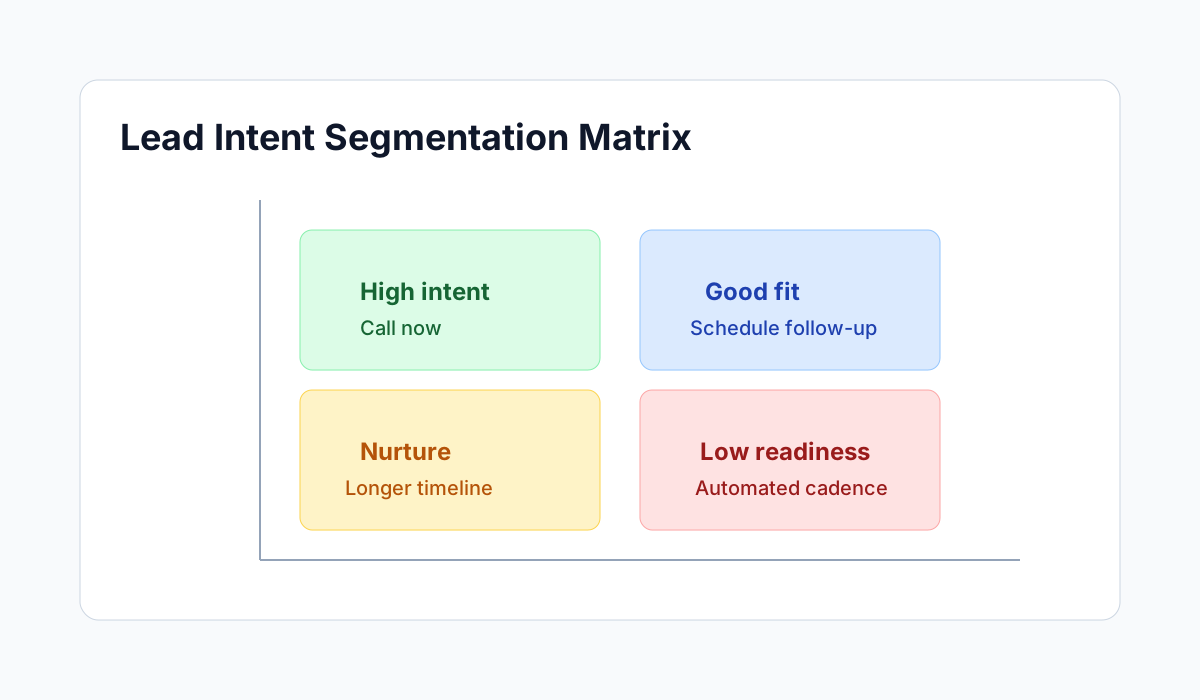
Three moments where opacity damages adoption
First, opacity weakens coaching because managers cannot explain why one inquiry outranked another. Second, it increases override friction because agents distrust recommendations they cannot audit. Third, it creates inconsistency across the team, which undermines any attempt at operational standardization.
What a trustworthy recommendation should contain
- A clear explanation of the signals that influenced the result
- A proposed next action that fits brokerage workflow
- An explicit place for human review and override
Why this matters for broker trust
Broker trust grows when AI-assisted qualification supports judgment instead of replacing it. Explainable AI, override workflow design, and recommendation transparency belong together if the goal is durable team adoption.
Next step: