
Did Your Broker AI Pilot Pass? 4 Criteria Teams Should Actually Measure
Measure your AI pilot with practical criteria: lead quality, response speed, team trust, and daily reuse. Avoid vanity metrics.
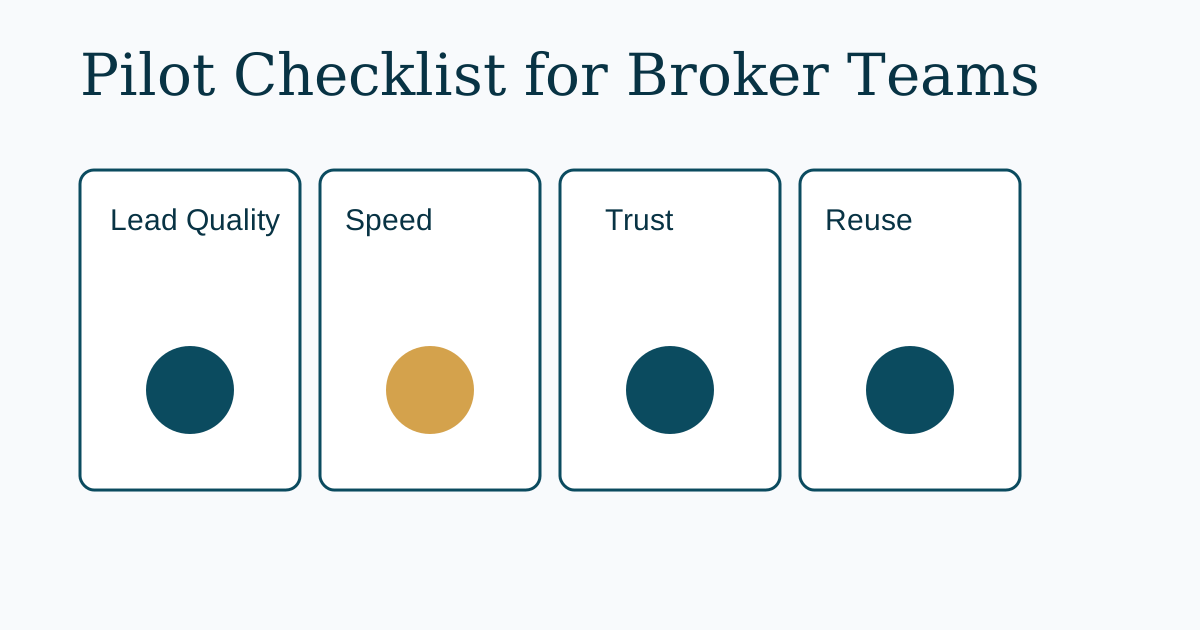
Many AI pilots look successful in demos and fail in production. The problem is not ambition. The problem is measurement. Teams track activity, but ignore adoption quality.
The four criteria that matter
- Lead quality uplift: Are qualified conversations increasing?
- Reaction speed: Did time-to-first-action improve for high-intent leads?
- Team trust: Are agents following recommendations without constant pushback?
- Daily reuse: Is the workflow used consistently after week four?
What to avoid during pilot reviews
Avoid vanity metrics like raw leads processed or dashboard clicks. These numbers may rise while conversion quality stays flat. Success means better decisions and repeatable behavior.
A practical pilot checkpoint
At your first formal review, each team should show clear progress across core criteria. If progress is not visible, the pilot is likely a tooling trial rather than an operating upgrade.
Use this framework before expanding seats, automations, or pricing tiers.
Related: Explainable AI and Trust.
What a credible pilot review should actually test
A broker AI pilot evaluation should examine whether the team behaves differently in practice, not whether a new tool looked impressive in a demo. The strongest review questions focus on adoption quality, decision clarity, and operational reuse.
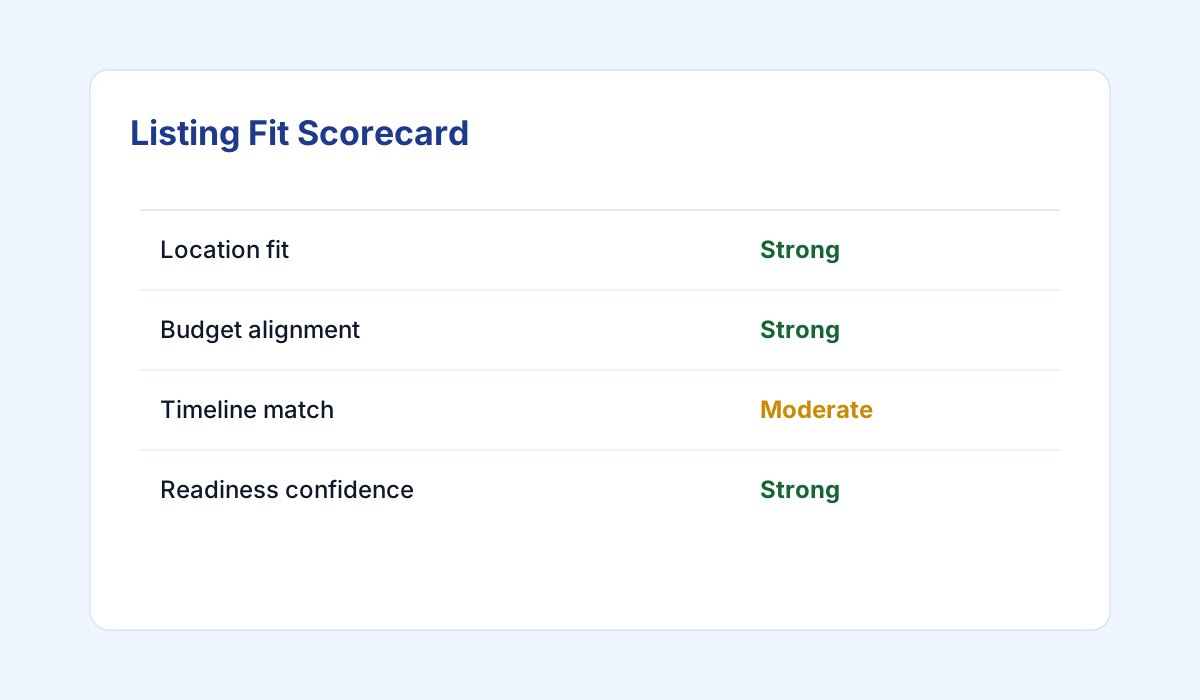
Three review lenses worth using
Look at how often agents accept recommendations, whether next actions make practical sense, and whether the workflow still gets used once the novelty has faded. Those signals are closer to long-term value than raw interaction counts.
How to keep pilot reviews intellectually honest
- Separate demo excitement from routine usage
- Review a sample of real lead decisions, not only dashboards
- Document where the workflow still depends on manual rescue
Why this matters commercially
Pilot evaluation frameworks are useful when they clarify whether a product improves buyer qualification and lead prioritization, not when they simply justify a rollout that was already assumed.
Next step: