
Language
Switch language directly on this article: same page, same URL structure, other language.
Prioritizing DE and EN Inquiries with One Decision System
Build a consistent qualification process across German and English inquiries without losing context, speed, or recommendation quality.
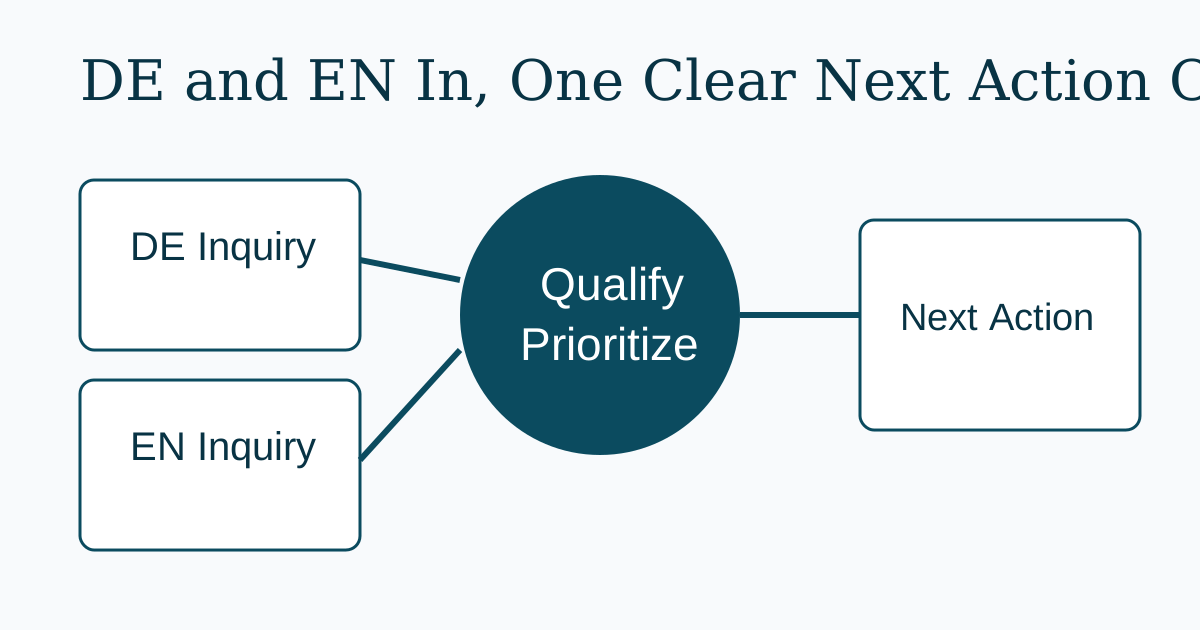
Multilingual demand is a growth signal, but it also introduces qualification inconsistency. Teams often respond faster in one language and slower in the other, creating hidden conversion losses.
One intake logic, two language outputs
The goal is not to run separate systems for DE and EN. The goal is one scoring logic with localized communication. Teams should evaluate the same criteria regardless of language input.
How to keep decisions consistent
- Use one qualification rubric for both languages
- Keep recommendation labels mapped to identical actions
- Track response speed by language and segment
When these rules are clear, teams avoid accidental bias where language determines urgency. Priority should always follow intent and readiness, not wording style.
Operational payoff
You get predictable routing, cleaner coaching, and stronger reporting. Managers can compare performance by segment without mixing process differences into the data.
See also: Next Action Workflow.
Operational framework for consistent execution
For multilingual lead qualification to create real business impact, teams need a repeatable operating model. Define ownership, response windows, and escalation paths across the funnel. Combining DE EN inquiry routing, bilingual broker operations, and clear accountability reduces day-to-day friction and improves decision quality.
Implementation checklist for broker teams
- Document explicit routing rules for high, medium, and low-priority leads
- Run a weekly quality review with team-level feedback loops
- Capture override reasons to improve criteria over time
- Track response speed and progression metrics by lead segment
Common mistakes that reduce ROI
The biggest failure pattern is inconsistent adoption: one part of the team follows the framework while others improvise. The second is no calibration cadence: without regular tuning, real estate lead prioritization loses relevance. The third is dashboard overload with no primary decision metric tied to outcomes.
30-60-90 day rollout model
Days 1-30: Launch criteria, capture baseline metrics, and align team behavior. Days 31-60: Analyze outliers, adjust thresholds, and tighten next-action definitions. Days 61-90: Lock standards, automate repeatable patterns, and verify sustained decision quality.
FAQ for leadership teams
When should we expect measurable gains? Most teams see early movement in response speed and priority clarity within weeks.
What is the leading metric to watch? Time-to-first-relevant-action paired with qualified conversation rate.
How do we avoid over-automation risk? Keep recommendation rationale visible and require human override as a controlled step.
Next step: